
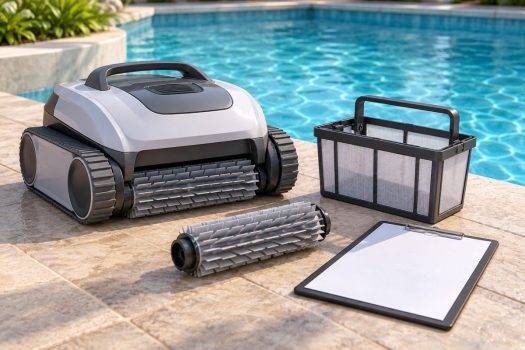
A stopped pool robot does not automatically need replacement. A blocked basket, worn brush or serviceable cable problem can lead to a very different decision from a costly sealed-unit repair. The sensible choice starts with diagnosis, an actual quote and the price of a suitable replacement—not a universal age rule.
Check warranty and manufacturer-approved troubleshooting first. Compare the complete repair quote with a compatible replacement, including shipping, diagnosis and necessary accessories. Repair when it restores a suitable cleaner at a reasonable documented cost; replace when the repair is poor value or the old model no longer fits the job.
Research checked October 5, 2026. This is a specification-led buying guide, not a hands-on test ranking. Prices, stock and model generations can change.
Affiliate disclosure: We may earn a commission from qualifying purchases made through links on this site.
Compare the shortlist
Use these candidates to narrow the job and ownership routine. The notes below explain the tradeoffs; listing presence is not a guarantee of current Amazon availability.
| Candidate | Reason to investigate | What to confirm |
|---|---|---|
| Wear item with confirmed part number | Investigate repair | Include fitting cost and compatibility |
| Covered warranty fault | Use the warranty route first | Confirm seller eligibility and shipping terms |
| Expensive sealed motor or battery issue | Request an actual service quote | Do not open sealed electrical units without approved service |
| Working but unsuitable cleaner | Consider replacement by coverage need | A repair does not add missing cleaning zones |
Diagnose before spending
Write down the symptom: no power, short runtime, poor pickup, failure to climb or repeated trapping. Those are different problems. Use the exact manual's troubleshooting steps and inspect only the user-serviceable areas it identifies. Start with basic filter condition and setup before assuming a major internal fault.
If the problem involves a charger, power supply, cable or sealed electrical component, use the manufacturer's service route. Avoid improvising electrical repairs. Record the model and serial number, seller, purchase date and any error indication. Good identification makes a diagnosis and quote much more useful.
Check warranty before buying parts
Find the receipt and current warranty terms for your model and seller. Ask whether diagnosis, shipping and the proposed repair are covered. A marketplace extended plan is not automatically the manufacturer's warranty, and a general brand warranty statement may not apply to every seller or refurbished unit.
If support authorizes a repair, keep the instructions and case reference. Do not buy a part before confirming that fitting it will preserve any relevant coverage. A low-priced component is not a saving if it is the wrong revision or if the fault lies somewhere else.
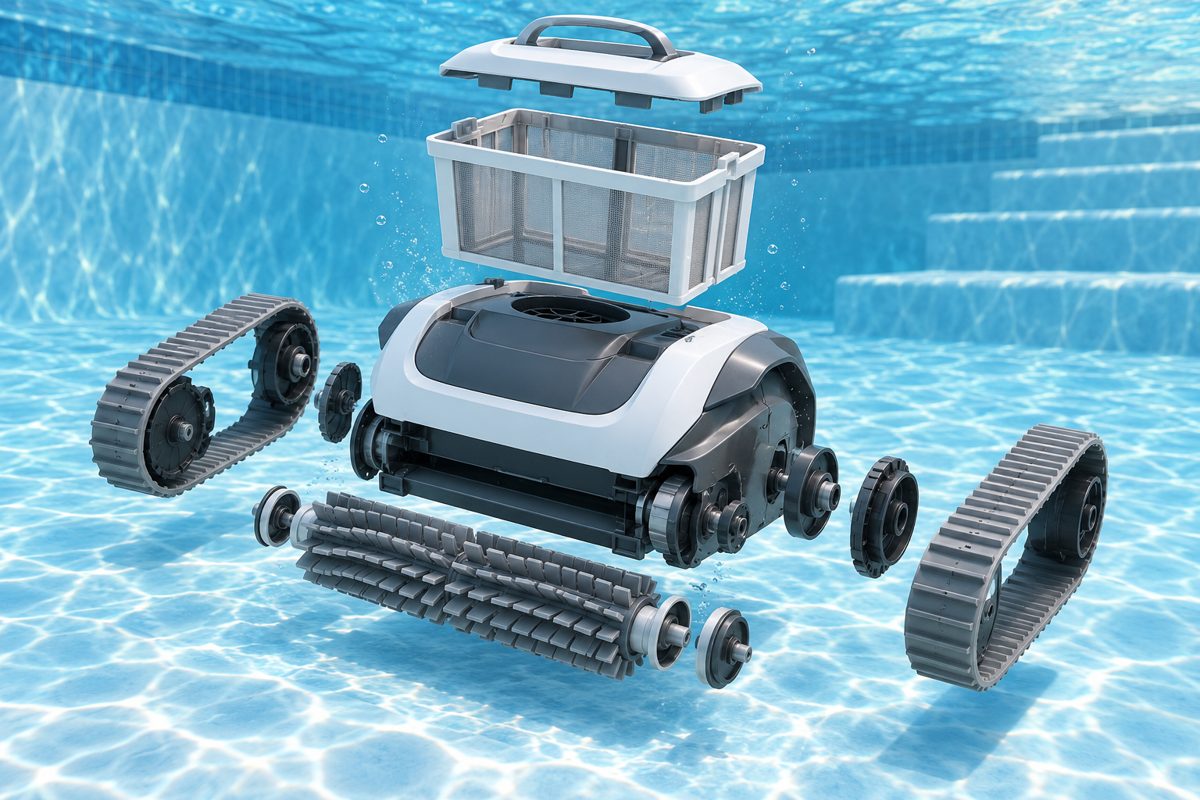
Use a complete cost worksheet
Record diagnosis, parts, labor, shipping and any required accessories as separate amounts. Their sum is the repair total. Then record the price of a replacement that actually fits your pool, adding necessary filters, delivery and tax. Compare complete alternatives rather than a bare replacement price with an incomplete repair estimate.
For example, a hypothetical $70 diagnosis, $160 part, $90 labor and $40 shipping total $360. Against a hypothetical $750 complete replacement, that is 48 percent. This is an arithmetic example, not a market quote or an automatic repair threshold. The decision still depends on warranty, other worn components and whether the old cleaner remains suitable.
Suitability and risk matter alongside the ratio
A repaired floor-only robot still will not provide dedicated waterline cleaning. If your needs have changed, the repair quote should be compared with a replacement that solves them. Conversely, replacing a useful model for one worn brush can be unnecessary if an approved compatible part is available.
Ask what the quote restores, what warranty the repair carries and which other components appear worn. Consider downtime and access to future parts. There is no defensible universal lifespan or repair-percentage cutoff for every pool robot. Use documented costs and the condition of the actual machine rather than treating age alone as a verdict.
If your cleaner was a good fit until a user-replaceable wear item failed, a confirmed part can make repair attractive. If the quote is large, other components are worn and the cleaner never handled your waterline, replacement may provide better value. Diagnose the fault and the unmet cleaning need separately.
Choose your next step
Open the route that matches your situation. Then use the checklist before ordering.
I am choosing my first cleaner
Start with the buying guide to match cleaning zones, pool geometry and your maintenance routine. Use this article’s shortlist only after those requirements are clear.
I already own a cleaner but one chore remains
Identify the missed zone or debris type. Check compatible filters and the manual before replacing the entire cleaner. For a replacement decision, compare repair and replacement costs.
I have narrowed it to two models
Compare exact product numbers, included equipment and seller support. Browse current cleaner options and confirm the final offer before purchase.
This checklist is for your current reading session; selections are not saved or transmitted.
Common questions
At what repair percentage should I replace a robot?
There is no universal threshold. Use the complete quote, repair warranty, remaining condition and suitability of the old cleaner.
Can I fit any part with a similar model name?
No. Match the exact model, revision and manufacturer part number.
Should I replace a robot because it is old?
Age is one consideration, not a diagnosis. Parts availability, actual condition and the cost of restoring a useful cleaner matter more than a fixed age rule.
Related guides and shopping paths
Maintain water chemistry alongside debris removal. CDC pool-care guidance
Sources and how to use this guide
Recommendations reflect documented suitability and ownership tradeoffs. Manufacturer claims are identified as specifications, not independently measured outcomes. Verify the exact model’s manual, package, price and seller terms before purchase.