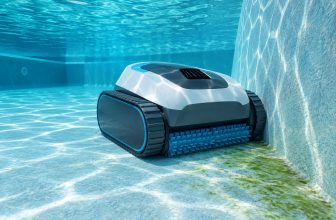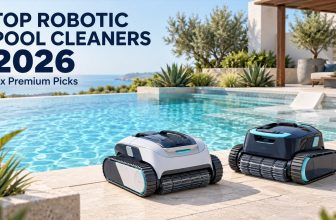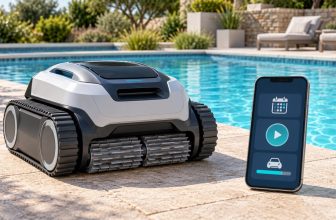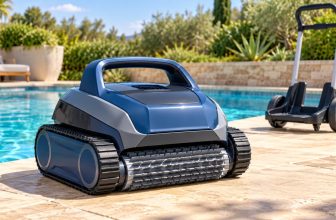
Best Robotic Pool Cleaners: How to Find the Best Model for Your Pool
The best robotic pool cleaner is not simply the most expensive machine or the one with the longest feature list. The useful question is which class of cleaner best matches your pool, debris and cleaning routine.
What Makes a Robotic Pool Cleaner ‘Best’?
Product rankings become misleading when incompatible cleaners are compared as if they perform the same job. A compact floor cleaner for a small above-ground pool and a premium waterline robot for a large inground pool solve different problems.
Our approach is to evaluate the job first: pool compatibility, coverage, filtration, navigation, power architecture, maintenance and price.

Choose the Best Cleaner by Pool Type
For inground pools, pay close attention to wall transitions, slopes, maximum pool length and waterline capability. For above-ground pools, confirm surface compatibility and whether wall climbing is actually needed.
Features Worth Paying For
Apps, mapping, cameras and automation can be valuable, but they should improve the cleaning workflow rather than simply decorate the specification sheet.

Best Robotic Pool Cleaners by Budget
Price should narrow an already-compatible shortlist. Our shop-by-price directory lets you browse the current catalog without freezing this evergreen guide to products or prices that may change.
| Budget | Prioritize |
|---|---|
| Entry | Pool compatibility and dependable floor cleaning. |
| Midrange | Improved coverage, filtration and navigation. |
| Premium | Waterline performance, sophisticated navigation and automation. |

Build a Better Shortlist
- Choose the correct pool category.
- Eliminate models that cannot cover your pool size.
- Decide whether walls and waterline matter.
- Choose corded or cordless.
- Compare filtration and navigation.
- Check replacement parts and warranty.
- Compare the remaining models on price.
For the full decision framework, use our robotic pool cleaner buying guide.
Remember What the Robot Does Not Do
A robotic cleaner handles physical cleaning. It does not replace proper sanitizer levels, pH control or swimmer safety. CDC provides residential pool water guidance, while CPSC maintains its Pool Safely resources. CDC healthy swimming guidance and CPSC Pool Safely are useful companion resources.
The Best Cleaner Depends on the Job
A useful “best” list should separate cleaning jobs instead of pretending one machine wins every category. The best robot for a small flat above-ground pool may be lightweight, simple and inexpensive. A large freeform inground pool may justify sophisticated navigation, wall and waterline cleaning, larger filtration capacity and longer operating cycles.
Why We Wouldn’t Buy on Star Ratings Alone
Customer ratings can provide useful ownership context, but they combine experiences from pools that may have almost nothing in common. A five-star review from an owner with a small rectangular pool does not prove the same cleaner will navigate a large pool with a deep-end transition, benches and a raised spa wall.
Use reviews to identify recurring ownership themes—filter access, charging, reliability, retrieval and customer support—but use specifications to establish compatibility. The order matters. A highly rated incompatible cleaner is still the wrong cleaner.
When Premium Features Are Worth Paying For
Premium navigation can be worthwhile when geometry is complicated or missed areas are a recurring frustration. Waterline cleaning can be worthwhile when buildup at the upper perimeter otherwise requires frequent manual brushing. Larger filters can be worthwhile in heavily landscaped yards. App scheduling can be worthwhile when the cleaner is designed to remain available for scheduled operation according to its instructions.
The same feature may be unnecessary in another pool. Someone with a compact pool and light debris may get little practical benefit from cameras, elaborate mapping or multiple specialized cycles. Paying for capability you will not use does not improve the cleaning result.
Compare Ownership, Not Just Purchase Price
Two robots with similar purchase prices can have different long-term ownership profiles. Filters, brushes, tracks and batteries are consumable or wear components. Warranty length matters, but so does parts availability and whether routine maintenance can be performed without turning every minor issue into a service event.
Before choosing between finalists, check the manufacturer’s support documentation and replacement-parts ecosystem. That final check can be more important than one additional app feature.
Our Shortlisting Method
We prefer a compatibility-first process: pool type and size, required cleaning zones, debris and filtration, corded or cordless architecture, navigation, ownership convenience, then price. That approach intentionally avoids naming a universal winner because the cleaner has to fit the pool before any performance comparison is meaningful.
Use the complete robotic pool cleaner buying guide if you need help defining those requirements before browsing the catalog.
Four Pools, Four Different “Best” Cleaners
Consider a 24-foot above-ground pool with a flat floor and light debris. A simple floor-focused robot may do everything the owner needs, and paying for advanced wall mapping could add cost without adding useful cleaning. Now consider a 40-foot freeform plaster pool with a deep end, benches and a heavy leaf load. Navigation, wall transitions, basket capacity and waterline performance suddenly become much more important.
A third pool might be a compact inground fiberglass pool where convenience is the priority. A lightweight cordless model with reliable coverage and easy retrieval may be more attractive than a heavier feature-rich machine. A fourth pool beneath mature trees may justify a cleaner with generous debris capacity even if its app is less sophisticated.
Those examples explain why this page is structured around matching capability to the pool rather than declaring one universal winner. “Best” should describe fitness for a job.
Specifications We Would Prioritize
Maximum pool size is a hard filter. Cleaning zones are next. Filter design and capacity follow because they determine how the machine handles the material it encounters. Navigation matters more as geometry becomes complex. Runtime matters in context with pool size and navigation. Weight and retrieval matter every time the machine comes out of the water.
Only after those fundamentals would we put significant weight on Wi-Fi, apps, remote steering, voice integrations or other convenience features. Those features can improve ownership, but they cannot turn a poorly matched cleaner into the right machine.
How to Get Past Robotic Pool Cleaner Marketing
Robotic pool cleaner product pages are filled with branded navigation systems, suction claims, AI terminology and proprietary acronyms. Some represent meaningful engineering; others make ordinary functions sound unique. Translate every claim into a practical question. What does the feature allow the cleaner to do that another model cannot? Does it improve coverage, filtration, scrubbing, retrieval or control?
If the answer is difficult to identify, do not assign the feature much value. Product comparison becomes easier when every marketing term has to earn its place by solving a real cleaning problem.
Warranty and Support Belong in the Comparison
Pool robots work in a harsh environment. They are submerged, exposed to treated water, moved on abrasive surfaces and repeatedly lifted, charged or connected. Even a well-designed machine may eventually need brushes, filters, tracks, a cable, power supply or battery service.
Check warranty duration and exclusions, but also look at how replacement parts are sold and whether documentation is readily available. A cleaner that can be maintained sensibly may be a better long-term purchase than a slightly more capable machine with difficult parts support.
What to Do After You Have a Shortlist
Once you have three to five compatible machines, compare them side by side instead of continuing to browse the entire market. Verify the same attributes for each: pool size, cleaning zones, filtration, navigation, power, cycle options, retrieval, weight, warranty and price. This turns a vague shopping exercise into a manageable equipment comparison.
Then use the robotic pool cleaner catalog and individual product pages to investigate the finalists. If you still do not know which attributes matter, the buying guide should be your starting point.
Why Category Winners Are More Useful Than One Overall Winner
A useful shopping guide can identify the characteristics that make a cleaner strong for a particular application without pretending every buyer has the same pool. Above-ground, inground, cordless, heavy-debris and premium automation shoppers arrive with different constraints. Separating those use cases also prevents an expensive full-featured robot from automatically appearing “better” than a simpler machine that performs a narrower job extremely well.
When you encounter any best-of list, check whether the recommendations explain who each cleaner is for. A product name without a pool type, cleaning-zone requirement and ownership rationale is not much of a recommendation.
How to Break a Tie Between Two Good Cleaners
When two finalists both fit the pool, move to ownership details. Which filter is easier to access? Which machine is lighter? Which has the more useful cycle options? Which manufacturer makes replacement wear parts easier to obtain? For cordless models, compare recharge and retrieval. For corded models, compare cable length and storage.
Then look at price. Paying somewhat more can make sense when the difference removes a recurring annoyance or adds a cleaning zone you genuinely need. Paying more for a feature you cannot explain in practical terms is much harder to justify.
The Best Cleaner Still Needs a Maintenance Routine
Empty debris before it becomes packed into the filter, inspect brushes and tracks, and follow the manufacturer’s storage instructions. A cleaner that is maintained consistently is easier to evaluate because declining performance is less likely to be caused by an overloaded filter or worn component.
Remember that automated debris cleaning remains one part of pool care. Water treatment, circulation and swimmer safety continue independently. That broader context is important when deciding what “best” should mean: the robot’s job is to clean the surfaces and debris it was designed to handle reliably and conveniently.
Frequently Asked Questions
How do I choose the best robotic pool cleaner?
Start with pool compatibility and required cleaning zones, then compare filtration, power, navigation, maintenance and price.
Is a more expensive robotic pool cleaner always better?
No. Extra capability only has value when it addresses your pool or cleaning routine.
Should I buy a corded or cordless robot?
Choose based on pool size, desired runtime, charging tolerance and cable-management preference. Our corded vs. cordless guide compares them in detail.
Where can I compare current models?
Use the robotic pool cleaner catalog to browse current products.