
Robotic Pool Cleaner Buying Guide: How to Choose the Right Pool Robot
Choosing a robotic pool cleaner is easier when you start with the pool rather than the feature list. This guide breaks the decision into compatibility, cleaning coverage, filtration, navigation, power and price so you can compare machines that actually fit the job.
Start With Your Pool, Not the Robot
Before comparing apps, battery claims or navigation systems, identify what the cleaner must handle. Pool length, depth, surface, shape and debris load determine which machines belong on the shortlist.
An inground robotic pool cleaner may need to negotiate slopes, deep ends, benches and wall transitions. An above-ground cleaner may be optimized for a flatter floor and smaller cleaning area.

Choose the Cleaning Coverage You Need
Floor cleaning, wall climbing and waterline cleaning are different capabilities. A robot that climbs a wall does not necessarily travel laterally along the waterline or scrub the upper perimeter effectively.
Corded vs. Cordless Robotic Pool Cleaners
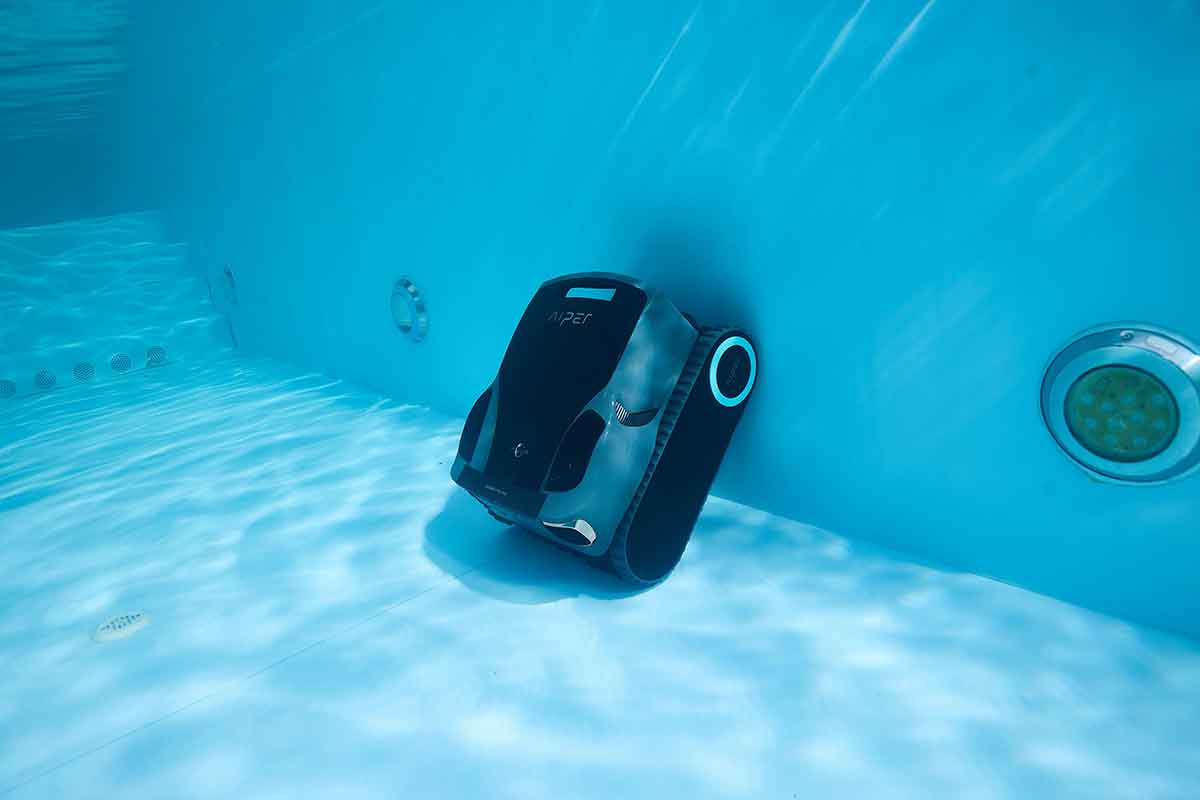
Cordless robotic pool cleaners remove the floating power cable but add battery runtime, charging and retrieval to the decision. Corded machines provide continuous power but require cable management and a suitable power-supply location.
Neither architecture is inherently superior. Read our corded vs. cordless robotic pool cleaner guide when this is the deciding factor.

Navigation, Mapping and Filtration
Navigation determines how efficiently a cleaner covers the pool. Basic machines may rely on programmed patterns while more sophisticated robots use sensors, gyroscopes, mapping or cameras. Judge the result rather than the buzzword: better coverage and fewer missed areas are what matter.
Filtration should match the debris. Large leaves demand capacity; sand, dust and pollen demand finer media. Active brushes can help loosen attached material before the robot captures it.
ENERGY STAR explains that robotic cleaners use low-voltage electricity and built-in filters rather than relying on the pool pump or a booster pump. See ENERGY STAR’s pool efficiency guidance.

How Much Should You Spend?
| Range | Typical Shopping Focus |
|---|---|
| Under $250 | Basic floor cleaning and simpler pools. |
| $250–$500 | Broader cordless selection and improving coverage. |
| $500–$1,000 | More wall, waterline, navigation and filtration options. |
| $1,000–$2,000 | Premium residential automation and broader feature sets. |
| $2,000+ | High-end or specialized applications. |
Use the ranges as shopping categories, not guarantees. Browse the live robotic pool cleaner price directory after deciding which capabilities are non-negotiable.
Compare Compatible Robots in the Right Order
- Confirm pool compatibility. Remove machines that do not fit the pool.
- Choose coverage. Floor, wall and waterline requirements come next.
- Match filtration to debris.
- Choose corded or cordless.
- Compare navigation and convenience.
- Compare price last.
Our robotic pool cleaner catalog is built to make that comparison easier.

Common Buying Mistakes
Common mistakes include buying on suction claims alone, assuming every robot climbs walls, confusing wall climbing with waterline cleaning, ignoring maximum pool size, assuming cordless automatically means better, and paying for app features before cleaning fundamentals.
A robot also does not replace circulation, sanitation or balanced water chemistry. CDC guidance emphasizes routine disinfectant and pH management for healthy swimming. Read CDC pool water treatment guidance.
Pool Shape, Surface and Obstacles Matter More Than They Look
Two pools with the same length can be very different cleaning environments. A simple rectangle gives a robot long, predictable runs. A freeform pool can introduce tight radiuses, beach entries, raised transitions, benches, steps and areas where the floor changes pitch. Those details influence whether a cleaner can maintain traction and whether its navigation system can reach the entire pool consistently.
Surface material deserves the same attention. Plaster, pebble, fiberglass, vinyl and tile do not all present the same traction conditions. Before buying, check the manufacturer’s compatibility information rather than assuming that a machine advertised for an inground pool is equally suited to every inground finish.
Steps and tanning ledges are particularly easy to misunderstand. A robot may climb the pool wall while still being unable to establish itself on a shallow ledge or clean every stair. If those areas are important to you, look for explicit manufacturer claims or demonstrations addressing them.
Match the Cleaner to the Debris You Actually Have
A heavily landscaped backyard and a screened pool enclosure create completely different cleaning jobs. Large leaves reward basket capacity and an intake that is difficult to clog. Fine desert dust, pollen and silt make filter fineness more important. Pools that frequently develop material attached to the surface benefit more from effective brushes and scrubbing action.
This is also why a single headline specification rarely tells the story. High flow does not automatically mean a robot will capture fine particles well, just as an ultra-fine filter is not especially helpful if a small basket constantly fills with large leaves. Think of the cleaner as a combination of pickup, filtration, scrubbing and navigation.
Think About Ownership After the First Cleaning Cycle
The best buying decision should still make sense six months later. Check how the filter is removed, whether it opens from the top, how much debris you must handle when cleaning it, and whether replacement baskets, brushes, tracks or other wear parts are readily available. For cordless models, battery serviceability can become an important long-term question.
Weight also matters more than it appears on a product page. A robot that feels manageable on the deck can feel considerably less convenient when it is being lifted from the pool with water still draining from the body and filter. Retrieval systems, handles and parking behavior therefore deserve real consideration.
EPA WaterSense recommends vacuuming and skimming regularly to reduce the load on a pool’s filtration system and advises cleaning the primary pool filter based on need rather than simply on a fixed schedule. A robot can become part of that broader maintenance routine rather than being treated as a replacement for it. EPA provides additional pool-maintenance guidance.
A Practical Example: Narrowing 30 Cleaners to Five
Imagine a 35-foot plaster inground pool with a deep end, curved walls and recurring leaves. Start by eliminating cleaners that are only intended for above-ground pools or smaller dimensions. Next remove floor-only machines if wall cleaning matters. If the pool receives a large volume of leaves, prioritize filter access and capacity. Decide whether charging a cordless machine between cycles fits the routine. Only then compare navigation, app features and price.
That process can remove most of the catalog before subjective preferences enter the decision. It is much more useful than starting with star ratings and trying to determine afterward whether the highest-rated product actually fits the pool.
How to Read a Robotic Pool Cleaner Specification Sheet
Specification sheets become much more useful once you know which numbers deserve attention. Start with maximum pool size and intended pool type. Then look for explicit cleaning zones: floor only, floor and walls, or floor, walls and waterline. After that, identify power type, cycle duration, filter configuration, dimensions and weight. Those facts tell you far more about compatibility than a long list of trademarked feature names.
When a manufacturer lists several cleaning modes, determine whether those modes change coverage or simply cycle length. A floor-only mode can be genuinely useful when most debris settles on the bottom. A dedicated wall or waterline mode can be valuable when the upper pool needs attention between full cycles. Conversely, five cycle names that perform nearly the same job should not carry much weight in the buying decision.
Also separate measurable specifications from marketing descriptions. “Smart navigation” is a description. The underlying sensors, mapping behavior, obstacle recognition or route control explain what the system actually does. “Powerful suction” is a description. Filter capacity, intake design and demonstrated debris handling tell you whether that power is useful for your pool.
Consider How Your Cleaning Needs Change Through the Season
The ideal cleaning routine may change during the year. Spring pollen, summer swimmer load, autumn leaves and winter storms can create very different debris patterns. A cleaner with multiple useful cycle options or interchangeable filtration may be more valuable when the pool faces several distinct cleaning seasons.
This also affects how often the robot will run. A lightly used pool might need occasional automated cleaning, while a pool beneath trees may need frequent cycles during leaf drop. Think about the hardest month of ownership, not just how clean the pool looks on the day you shop.
If a cover is part of the pool routine, debris load may be reduced substantially while the cover is in use. EPA WaterSense notes that covers can reduce cleaning requirements in addition to reducing evaporation. That does not change robot compatibility, but it can change how much automation you actually need.
The Five-Minute Check Before You Buy
Before clicking buy, confirm five things one last time: the robot is designed for your pool type and dimensions; it cleans the zones you care about; its filter suits your normal debris; its power and retrieval routine fit the way you intend to use it; and replacement parts or support are available. If any one of those answers is unclear, resolve it before allowing price or a promotional discount to make the decision for you.
A robotic pool cleaner can be an excellent piece of automation, but the best results come from treating it like pool equipment rather than a gadget. Compatibility first, cleaning fundamentals second, convenience third and price last is a reliable order for narrowing the field.
Questions Worth Answering Before Comparing Models
Ask how often you realistically expect the robot to run. Ask who will retrieve it, empty the filter and put it away. Ask whether the pool gets mostly leaves, fine dust or a mixture. Ask which areas currently consume the most manual cleaning time. These questions sound basic, but they convert a broad product search into an equipment specification tailored to your backyard.
Also decide which limitations you can tolerate. A floor-only robot can be a smart value if you are comfortable brushing the walls. A cordless cleaner can be convenient if its charging routine fits your schedule. A corded cleaner can be practical if cable management does not bother you. Buying well is often less about finding a machine with no compromises than choosing the compromises that matter least to you.
What to Check When the Cleaner Arrives
Before the first cycle, read the operating instructions, confirm the filter and brushes are installed correctly and follow the manufacturer’s startup procedure. Watch the first complete cleaning cycle if possible. You are establishing a baseline: where the robot travels, how it handles walls and transitions, where it finishes and what the filter captures.
Afterward, inspect the basket or cartridge. That first look tells you whether the filtration is addressing your actual debris. It also helps establish how often the filter will need attention. A cleaner should make pool ownership easier, but the owner still benefits from understanding how the machine behaves in the specific pool it was purchased to clean.
Frequently Asked Questions
What is the best robotic pool cleaner?
There is no single best cleaner for every pool. Match pool compatibility, cleaning coverage, filtration and power system first, then compare features and price. See our best robotic pool cleaners guide.
Are cordless robotic pool cleaners better?
They are more convenient for some owners, but batteries introduce runtime and charging limits. Corded models provide continuous power.
Do robotic pool cleaners climb walls?
Some do. Verify the manufacturer’s stated cleaning zones rather than assuming all robots climb walls.
Does a robot replace the pool filter?
No. It collects debris in its own filter but does not replace the pool’s circulation, filtration or sanitation systems.