
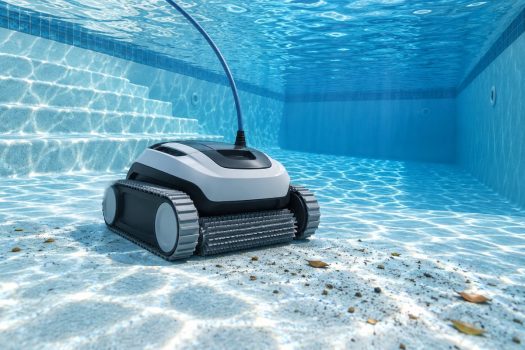
The best robotic cleaner for an inground pool depends on what the pool asks it to do. A modest rectangular pool with occasional leaves is not the same challenge as a long freeform pool with a shallow shelf, curved walls and fine dust. Start with coverage requirements, then choose an ownership routine.
For ordinary floor-and-wall work, investigate the Nautilus CC Plus Wi-Fi or the appropriate Scuba S1. For a persistent tile-band chore, compare the Nautilus CC Pro, Polaris VRX iQ+ and a waterline-rated cordless model. Large or complex pools need a separate dimension and shallow-area check.
Research checked October 5, 2026. This is a specification-led buying guide, not a hands-on test ranking. Prices, stock and model generations can change.
Affiliate disclosure: We may earn a commission from qualifying purchases made through links on this site.
Compare the shortlist
Use these candidates to narrow the job and ownership routine. The notes below explain the tradeoffs; listing presence is not a guarantee of current Amazon availability.
| Candidate | Reason to investigate | What to confirm |
|---|---|---|
| Nautilus CC Plus Wi-Fi | Floor-and-wall corded shortlist | Confirm the exact maximum pool length |
| Aiper Scuba S1 | Cordless shortlist | Match generation, surfaces and size |
| Nautilus CC Pro / Polaris VRX iQ+ | Waterline-oriented shortlist | Verify the exact coverage and filter configuration |
| Beatbot AquaSense 2 | Cordless waterline-oriented candidate | Surface parking does not mean surface skimming |
Build a pool profile in five minutes
Write down length, width, deepest point and the pool surface. Add a quick sketch showing steps, benches, drains, a tanning shelf and the power location. These details are more useful than gallons alone because the cleaner travels over surfaces and around obstacles.
Then describe the debris. Leaves call attention to basket loading; dust raises filter questions; a tile-band film makes waterline scrubbing relevant. Rank those needs rather than asking one robot to be the best at everything. You will make a clearer purchase if you know which chore matters most.
Choose the cleaning zones deliberately
Floor-only, floor-and-wall and floor-wall-waterline are different categories. A floor-only model can be enough for a pool where you are happy brushing the rest. A floor-and-wall machine reduces another chore. A dedicated waterline feature becomes worthwhile when the tile band needs frequent attention.
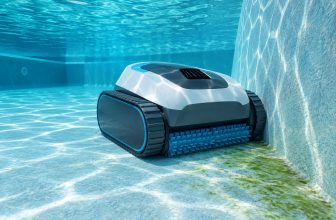
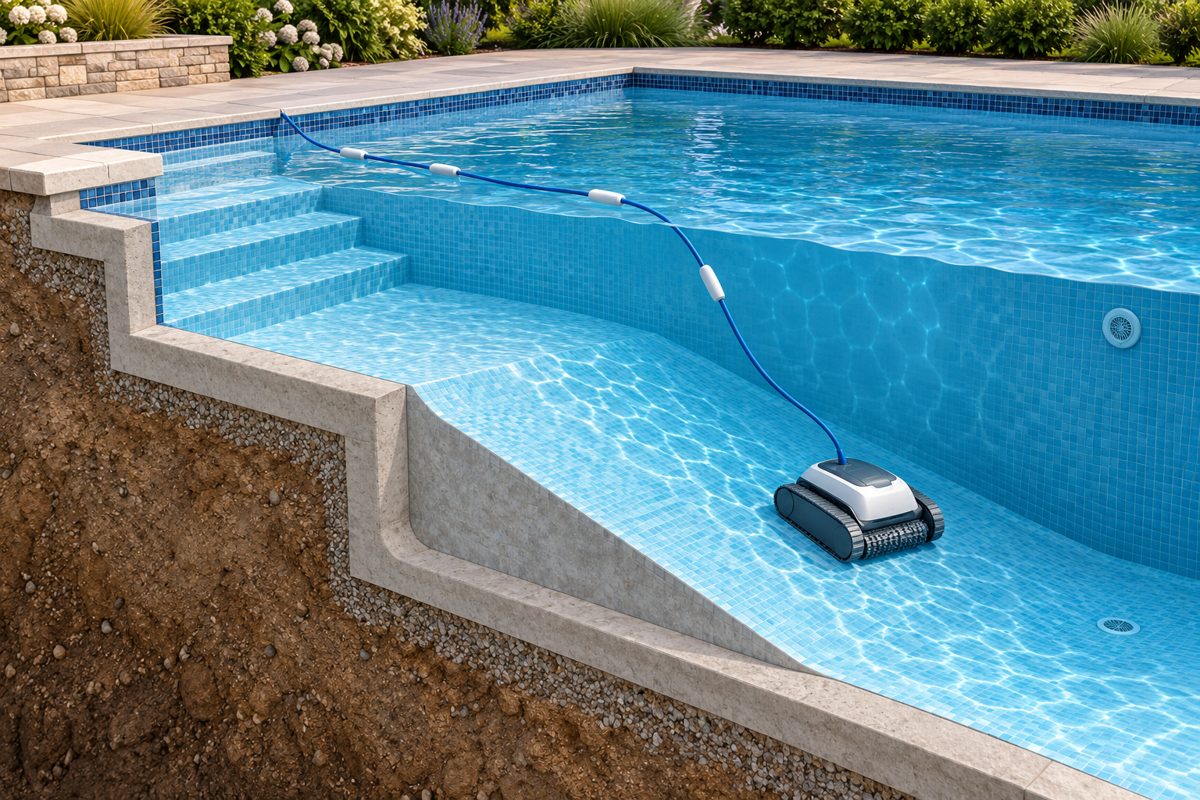
Steps and shallow shelves are a separate question. A cleaner can handle the main walls while leaving a shallow platform untouched. Check minimum operating depth and the space required for movement. Do not infer ledge coverage from a photo of a robot on a wall or a claim of intelligent navigation.
Use named models as candidates, not universal winners
The CC Plus and S1 are useful starting points for comparing corded and cordless ownership. If waterline work is essential, move to models whose manuals or manufacturer pages explicitly support it. The CC Pro, VRX iQ+ and AquaSense 2 provide different routes to investigate.
The AquaSense 2's return to the water surface is a retrieval feature, not a promise that the standard model skims floating leaves. The catalog also contains cleaner-and-skimmer bundles. Separate the duties of each device before deciding whether a bundle saves money or simply adds equipment you do not need.
Evaluate the difficult areas first
During your return window, inspect the deep-end transition, behind ladders, around drains and under benches. Record whether the cleaner physically reaches each area. If it misses a shallow shelf, another long cycle on the main floor will not necessarily solve the problem.
Keep a simple log: starting position, mode, filter condition and missed areas. Use the manual's setup guidance and ask support about repeated problems. Avoid judging solely on an impressive route in the center of the pool. The best fit is the cleaner that reduces your actual remaining work while staying practical to retrieve and maintain.
For a straightforward 30-foot rectangle, a floor-and-wall cleaner can be enough. For a pool of the same length with a wide shallow shelf and persistent tile-band residue, coverage confirmation is more important than a headline runtime. Equal gallons do not mean equal cleaning demands.
Choose your next step
Open the route that matches your situation. Then use the checklist before ordering.
I am choosing my first cleaner
Start with the buying guide to match cleaning zones, pool geometry and your maintenance routine. Use this article’s shortlist only after those requirements are clear.
I already own a cleaner but one chore remains
Identify the missed zone or debris type. Check compatible filters and the manual before replacing the entire cleaner. For a replacement decision, compare repair and replacement costs.
I have narrowed it to two models
Compare exact product numbers, included equipment and seller support. Browse current cleaner options and confirm the final offer before purchase.
This checklist is for your current reading session; selections are not saved or transmitted.
Common questions
Can one robot clean every part of an inground pool?
Some support more zones than others, but steps, benches and shallow shelves still need exact-model confirmation.
Are gallons enough to choose a cleaner?
No. Length, floor area, depth changes and obstacles provide a more useful compatibility picture.
Do I still need the pool filter?
Yes. A robotic cleaner removes debris from supported surfaces; it does not replace the pool's circulation and water-care routine.
Related guides and shopping paths
Maintain water chemistry alongside debris removal. CDC pool-care guidance
Sources and how to use this guide
Recommendations reflect documented suitability and ownership tradeoffs. Manufacturer claims are identified as specifications, not independently measured outcomes. Verify the exact model’s manual, package, price and seller terms before purchase.