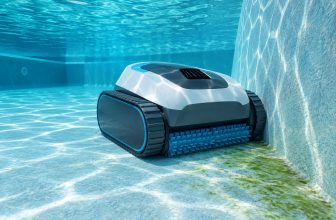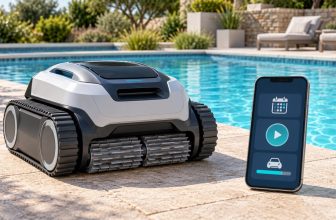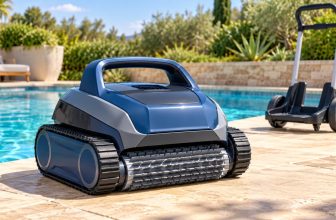

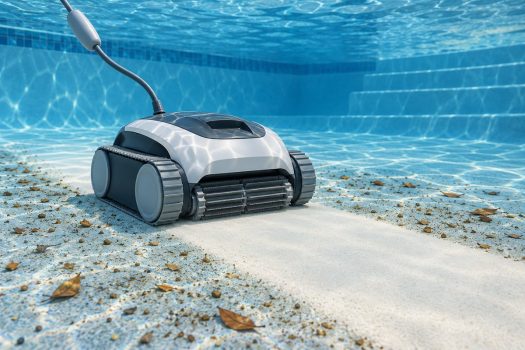
A pool robot can leave the floor looking swept while a fine cloud reappears behind it. That usually means you need to investigate filtration, coverage or the source of the particles rather than buy the largest motor. Sand, silt and pollen behave differently, and a cleaner's ordinary debris basket may not capture them all.
If the returning residue is associated with an algae cleanup, read our guide to robotic pool cleaners for algae. It compares seven residential models by scrubbing, filtration and coverage, including the limits of robot-assisted cleanup.
Choose a compatible robot with a documented fine or ultra-fine filter option, then confirm what is actually included. The current Aiper Scuba S1's dual filtration and appropriate Dolphin filter configurations deserve investigation. Treat micron figures as manufacturer specifications, not proof of identical real-world capture.
Research checked October 5, 2026. This is a specification-led buying guide, not a hands-on test ranking. Prices, stock and model generations can change.
Affiliate disclosure: We may earn a commission from qualifying purchases made through links on this site.
Compare the shortlist
Use these candidates to narrow the job and ownership routine. The notes below explain the tradeoffs; listing presence is not a guarantee of current Amazon availability.
| Candidate | Reason to investigate | What to confirm |
|---|---|---|
| Current Aiper Scuba S1 | Fine-particle filtration shortlist | Match the dual-filter claim to the exact generation |
| Dolphin Nautilus CC Plus Wi-Fi | Corded cleaning with filter choices | Manufacturer tables and seller bundles can differ |
| Dolphin Nautilus CC Pro | Waterline-capable alternative | Confirm a compatible fine filter is included or budgeted |
Why sand and pollen need different questions
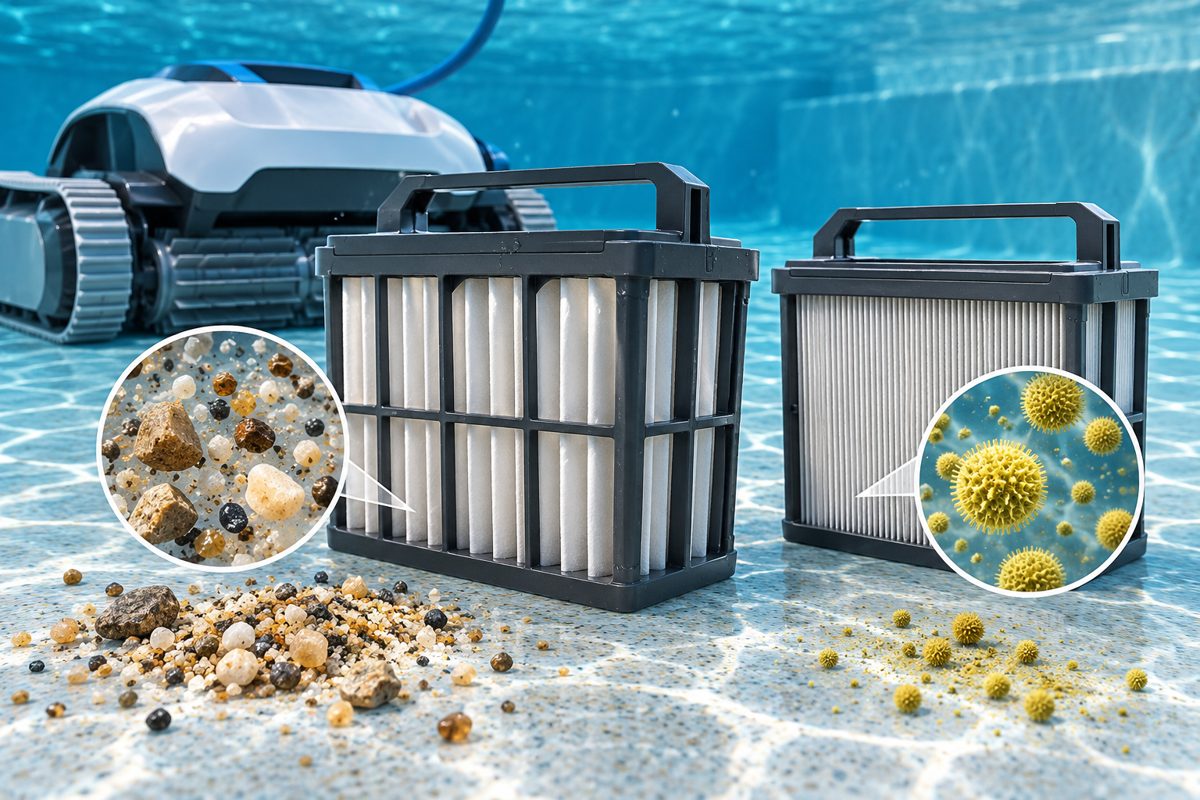
Heavier sand tends to settle, so the cleaner must reach the affected floor and retain the particles it collects. Fine silt can be stirred into suspension and settle again later. Pollen may initially float before collecting on surfaces. A single pass through the center of the pool does not address every stage.
Start by identifying where the debris appears. A recurring sandy pile near a return, a uniform dusty film and pollen floating in a corner are different observations. If a pile repeatedly returns after cleaning, investigate the source as well as the robot. Repeatedly vacuuming a symptom is not the same as stopping it.
Read filter descriptions carefully
'Fine' and 'ultra-fine' are labels, not a cross-brand standard. A stated micron rating is useful, but capture also depends on sealing, bypass paths, loading and how the filter is used. Ask whether the finer stage is installed by default, optional or intended for occasional use.
The current S1 page describes a MicroMesh option, while older S1 listings may describe a different configuration. Dolphin pages can also show different filter kits for related models. Match the manufacturer's part number and seller's included-items list. If the two disagree, get clarification before treating the cheaper offer as equivalent.
Use two passes when the debris is mixed
For a pool containing leaves and very fine particles, clear bulky debris first with the recommended filter setup. Then use the fine stage for a polishing pass if the manufacturer supports it. A fine insert packed with leaves can restrict flow well before the basket appears full.
Rinse the filter as instructed and inspect seals and seating. Avoid harsh cleaning methods that can damage mesh or pleats. Clean filtration makes a meaningful comparison possible: judging two robots with one filter partly blocked is not a fair test of either machine.
Evaluate the result after settling
Take a before photograph in a consistent location and lighting. After the cycle, allow disturbed particles to settle and inspect the same spot. Record whether the robot covered it, whether debris remains in the basket, and whether a visible cloud escaped. Keep your circulation and filter routine consistent while comparing results.
A clean floor immediately after a pass is useful, but it is not enough to prove sustained fine-particle capture. Inspect corners, the deep-end transition and the area around fittings. If the cleaner misses those areas, navigation and access may be the limitation even with an excellent filter. Choose the fix that matches the observation.
For a lightly dusty pool, an appropriate fine filter may be a cheaper improvement than replacing a functioning robot. For a pool with a daily sandy mound, inspect the source and coverage first. A finer filter will not help if the cleaner never reaches the mound.
Choose your next step
Open the route that matches your situation. Then use the checklist before ordering.
I am choosing my first cleaner
Start with the buying guide to match cleaning zones, pool geometry and your maintenance routine. Use this article’s shortlist only after those requirements are clear.
I already own a cleaner but one chore remains
Identify the missed zone or debris type. Check compatible filters and the manual before replacing the entire cleaner. For a replacement decision, compare repair and replacement costs.
I have narrowed it to two models
Compare exact product numbers, included equipment and seller support. Browse current cleaner options and confirm the final offer before purchase.
This checklist is for your current reading session; selections are not saved or transmitted.
Common questions
Is a lower micron rating always better?
It suggests a finer stated filtration level, but loading, sealing and flow also affect usefulness. It does not independently prove superior cleaning.
Can a robot remove all pollen?
A compatible fine filter may collect some, but floating pollen and suspended material can also require surface skimming and the pool's circulation system.
Why does dust return after cleaning?
It may have been stirred up, passed through a filter, entered again, or settled in areas the robot did not cover. Observe the pattern before buying a replacement.
Related guides and shopping paths
Maintain water chemistry alongside debris removal. CDC pool-care guidance
Sources and how to use this guide
Recommendations reflect documented suitability and ownership tradeoffs. Manufacturer claims are identified as specifications, not independently measured outcomes. Verify the exact model’s manual, package, price and seller terms before purchase.